
JointVance Turmeric Root Extract 4:1: What It Is and What the Research Shows
JointVance has 75 mg of turmeric root extract 4:1 per capsule, about 300 mg of root equivalent. The label does not state its curcumin content. Knee studies found modest, short-term pain relief over 4 to 16 weeks and no cartilage change. Ask a doctor first if you take blood thinners or have liver or gallbladder disease.
What is the turmeric root extract 4:1 in JointVance?
A concentrated root extract with no curcumin figure.
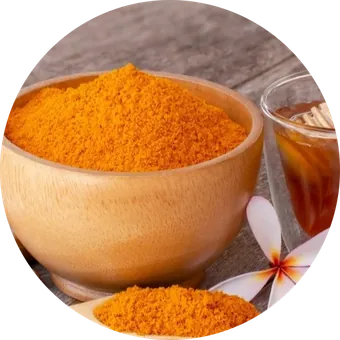
Turmeric root extract 4:1 is the largest ingredient in JointVance, at 75 mg per capsule. It is made from the root of Curcuma longa, the plant behind the kitchen spice.
The "4:1" tells you how much root was used. About 4 parts of dried root went into 1 part of extract. It is a concentration ratio, not a strength rating.
The label does not say how much curcumin this extract contains. That is the main gap. The second turmeric line, the 95% curcuminoid extract, is the measured part of the formula.
- Curcuma longa root
- 75 mg per capsule
- 4 to 1 ratio
- Curcumin share not stated
What does 4:1 mean on a turmeric extract label?
Four parts root in, one part extract out.
A 4:1 ratio means the maker started with four times as much root as the extract that came out. So 75 mg of extract stands for about 300 mg of dried root.
A ratio says nothing about curcumin. Turmeric root holds many compounds, and extraction can keep more or less of each. Two 4:1 extracts can differ a lot in curcumin.
That is why researchers prefer standardized extracts. A standardized extract states its curcuminoid percentage, like the 95% line on the JointVance Supplement Facts panel.
Three ways turmeric can appear on a label
| Label wording | What it tells you | What it does not |
|---|---|---|
| Turmeric root extract 4:1, 75 mg | Concentration: about 300 mg of root | How much curcumin is inside |
| Turmeric root extract (95% curcuminoids), 30 mg | About 28.5 mg of curcuminoids | How much root was used |
| Turmeric root powder (kitchen spice) | Plain ground root | Curcumin content, which varies by crop |
Does turmeric help knee pain? What the research found
Modest, short-term pain relief; no structural change.
Turmeric may ease knee pain a little in the short term. Three key sources point the same way, with limits.
A 2016 meta-analysis of 8 trials found lower pain scores than placebo, about 2 points on a 10-point scale. It found no clear difference from pain medicines. The authors said the trials were too few and too small for firm conclusions (Daily et al., 2016).
A larger 2021 meta-analysis of 16 trials and 1,810 adults found turmeric extract beat placebo for pain and function. Results were similar to NSAIDs. But results varied widely between studies, and trials lasted 16 weeks at most (Wang et al., 2021 (meta-analysis)).
A 2020 trial in Annals of Internal Medicine gave Curcuma longa extract for 12 weeks. Knee pain improved 9.1 mm on a 100 mm scale more than placebo (Wang et al., 2020 (Annals RCT)). That is a small change.
Size of the effect, as a share of each pain scale
Turmeric knee research in brief
| Study | Design | Main finding | Limit |
|---|---|---|---|
| Daily et al., 2016 | 8 RCTs | Pain −2.04 of 10 vs placebo | Too few, small trials |
| Wang et al., 2021 (meta-analysis) | 16 RCTs, 1,810 adults | Pain and function better than placebo | Very high variation; short |
| Wang et al., 2020 (Annals RCT) | 1 RCT, 12 weeks | Pain −9.1 mm of 100 vs placebo | No MRI change |
None of these studies tested JointVance. Most used far more curcumin than its label shows, as the curcuminoids page explains.
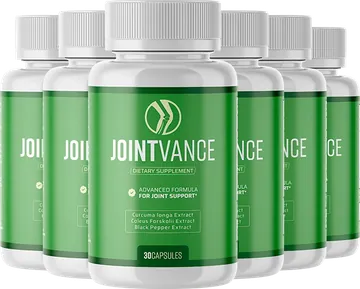
Ready to try JointVance?
Best value$49 a bottle · $294 for 6 $1,074
What does NCCIH say about turmeric for joints?
Encouraging, but not proven.
The U.S. National Center for Complementary and Integrative Health takes a careful line. It calls early evidence on oral turmeric for knee osteoarthritis encouraging, but says higher-quality studies are needed (NCCIH, Turmeric, 2025).
It also says it cannot yet conclude that turmeric or curcumin helps any health condition. That is a strong statement from the government's own herbal research center.
Arthritis guidelines are quiet too. The 2019 ACR/Arthritis Foundation guideline left most supplements out, so it neither recommends nor rejects turmeric (ACR/Arthritis Foundation guideline, 2019). It does strongly recommend exercise and weight loss.
Does turmeric root extract rebuild cartilage?
Pain may ease a little. Cartilage does not change.
No. No study shows that turmeric rebuilds, repairs or regrows cartilage.
The 2020 Annals trial checked this with MRI scans. After 12 weeks, the extract did not change joint swelling (effusion-synovitis) or cartilage composition (Wang et al., 2020 (Annals RCT)). The 2021 meta-analysis also found no difference in imaging or blood markers (Wang et al., 2021 (meta-analysis)).
Memorial Sloan Kettering sums it up: turmeric eased knee pain about as well as acetaminophen or an NSAID, but did not change cartilage (MSK About Herbs, Turmeric, 2026). Some sales pages for JointVance carry stories of cartilage regrowth and avoided surgery. No evidence supports those stories.
What studies found
- Small drop in knee pain in short trials
- Results similar to common pain pills in some studies
- Side effects similar to placebo in the Annals trial
What they did not find
- No change in cartilage on MRI
- No change in joint swelling
- Trials short, mostly 16 weeks or less
How long does turmeric take to work for joints?
Weeks, not days. Judge at 8 to 12 weeks.
Turmeric knee trials ran about 4 to 16 weeks. If it helps you, the change is likely to show within that window. NCCIH says usual oral turmeric is likely safe for up to 2 to 3 months (NCCIH, Turmeric, 2025).
One JointVance bottle lasts 30 days, so a fair test is two to three bottles. The 60-day money-back window covers the first two months.
- Day 1
Start
One capsule a day with water. Note your stairs and morning stiffness.
- Day 30
First bottle done
Compare your notes. Little change is normal this early.
- Day 60
Decide
Clear change? Keep going. None? Stop, and use the refund window if you wish.
See a doctor if pain grows, or a joint turns red, hot or swollen.
Who should not take turmeric root extract?
Liver, blood thinners, gallbladder and pregnancy.
Most adults tolerate turmeric well. The usual complaints are nausea, reflux, stomach upset, diarrhea or constipation. Four groups need a doctor's view first.
Turmeric safety notes
| Concern | What the source says | Source |
|---|---|---|
| Liver | Rare liver injury, usually 1 to 4 months in; black pepper products linked to several cases | LiverTox, Turmeric, 2025 |
| Blood thinners | INR above 10 in a warfarin patient; avoid with anticoagulants, antiplatelets, NSAIDs or SSRIs | Medsafe NZ, Turmeric and warfarin, 2018 |
| Gallbladder | Not recommended with gallstones, bile duct blockage or liver disease | EMA herbal monograph, Curcuma longa, 2018 |
| Pregnancy | Turmeric supplements in pregnancy may be unsafe | NCCIH, Turmeric, 2025 |
Our post on turmeric and liver safety explains the warning signs, and JointVance side effects lists every caution.
Is there lead in turmeric? A supply chain note
A known spice problem, not a finding about this bottle.
Some turmeric sold in South Asia has been found with lead. A 2024 study tested 356 samples from four countries. About 14% had more than 2 micrograms of lead per gram. The pattern pointed to lead chromate, a yellow pigment, added to brighten the color (Forsyth et al., 2024 (lead in turmeric)).
This study is about spice markets, not about JointVance. The JointVance label says "globally sourced ingredients" and does not name the turmeric's origin. No heavy-metal test for JointVance has been published yet.
- Country of origin for the turmericNot published
- Heavy-metal test results (lead, arsenic, cadmium, mercury)Not published
- Lot number on the bottle base, to match a future certificateOn bottle
If lead testing matters to you, ask the distributor for a certificate of analysis for your lot. See testing and quality for what a good certificate shows.
Turmeric root extract questions
What does turmeric root extract 4:1 mean?
It means about 4 parts of dried turmeric root went into 1 part of extract. So the 75 mg in JointVance is roughly 300 mg of root equivalent (calculated). The ratio says nothing about how much curcumin the extract holds.
Does turmeric help arthritis in knees?
It may help knee pain a little in the short term. Meta-analyses found less knee pain than placebo, with results similar to NSAIDs, but the trials were small, short and varied. NCCIH says higher-quality evidence is still needed.
How long does turmeric take to work for knee pain?
Knee trials ran about 4 to 16 weeks, and the main Annals trial lasted 12 weeks. Give it 8 to 12 weeks at most, stop if you see no clear change, and see a doctor if pain gets worse.
Who should not take turmeric supplements?
People on blood thinners, people with gallstones, bile duct problems or liver disease, and pregnant or nursing women should ask a doctor first or avoid them. Anyone on prescription medicines should check with a pharmacist.
Is turmeric a blood thinner?
Turmeric is not a blood thinner drug, but curcumin has antiplatelet effects. New Zealand's Medsafe reported a warfarin patient whose INR rose above 10 after starting a turmeric product, so it should not be combined with anticoagulants without a doctor.
Can turmeric cause liver damage?
Rarely, yes. LiverTox calls turmeric a well-documented cause of liver injury, usually 1 to 4 months after starting, and many cases involved products with black pepper. Stop and call a doctor if you notice dark urine, yellow skin or eyes, or unusual tiredness.
Does turmeric rebuild cartilage?
No study shows that. In a 12-week trial, turmeric extract eased knee pain slightly but did not change cartilage or joint swelling on MRI. Treat any claim of cartilage regrowth as unsupported.
Is there lead in turmeric supplements?
Some turmeric spice from South Asia has been found with lead chromate added as a colorant. That study is not about JointVance, and no heavy-metal test for JointVance has been published, so ask the distributor for a certificate of analysis.
How is turmeric different from curcumin?
Turmeric is the whole root. Curcumin is its best-known active compound, and it makes up only a small part of the root. A standardized extract tells you its curcumin content; a ratio extract like 4:1 does not.
Ready to try JointVance?
Order from the U.S. authorized merchant, keep your order email, and you are covered by the 60-day money-back guarantee. Questions first? Call +1 (302) 200-3480.
- Secure checkout
- 60-day money-back window
- Ships from the US
- Tracking by email
Keep reading
Curcuminoids
What 95% curcuminoids means, how 28.5 mg compares with studies and why piperine is added.
Read more →BioPerine
Black pepper extract that boosts curcumin absorption. Label misprint, drug levels and liver caution.
Read more →Does turmeric help knee pain?
What turmeric knee trials found, the size of the effect, the doses used and why cartilage did not change.
Read more →