
JointVance Curcuminoids: The 95% Extract, the 28.5 mg Dose and the Research
JointVance has 30 mg of turmeric extract standardized to 95% curcuminoids, about 28.5 mg a day. Knee studies mostly used about 1,000 mg of curcumin a day, so this is about 3% of that. BioPerine is added to raise absorption. Curcumin eased knee pain slightly in trials but did not change cartilage.
What are the curcuminoids in JointVance?
The measured, yellow part of turmeric.
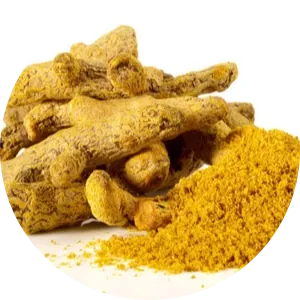
Curcuminoids are the yellow compounds in turmeric root. Curcumin is the main one. Two close relatives, demethoxycurcumin and bisdemethoxycurcumin, make up the rest.
JointVance gets its measured curcuminoids from one line on the label: 30 mg of turmeric root extract standardized to 95% curcuminoids. That works out to about 28.5 mg a day.
Most turmeric research reports doses as curcumin or curcuminoids. So this is the number to compare with studies. The other turmeric line is explained on the turmeric root extract 4:1 page.
- Extract
- 30 mgper capsule
- Standardized to
- 95%curcuminoids
- Curcuminoids
- ≈28.5 mga day (calculated)
What does 95% curcuminoids mean on a label?
A fixed, tested share of curcuminoids.
Standardized means the maker tests the extract and fixes how much of the active compound it holds. A 95% extract is 95% curcuminoids by weight.
This is the most useful number on the JointVance Supplement Facts panel. It is the only turmeric line with a known curcumin dose.
We do not add the 75 mg 4:1 extract to this figure. Its curcumin share is not stated. Adding the two would make the dose look bigger than anyone can confirm.
Curcuminoids in JointVance, per capsule
| Turmeric line | Per capsule | Curcuminoids |
|---|---|---|
| Turmeric root extract (95% curcuminoids) | 30 mg | ≈28.5 mg (calculated) |
| Turmeric root extract 4:1 | 75 mg | Not stated |
| Both together | 105 mg of extract | At least 28.5 mg; the rest unknown |
How does the JointVance curcumin dose compare with studies?
About 3% of the amount behind the knee studies.
The JointVance dose is far below the amounts behind the positive knee studies. The 2016 meta-analysis cites about 1,000 mg of curcumin a day (Daily et al., 2016). LiverTox notes that products range from 100 to more than 1,000 mg a day (LiverTox, Turmeric, 2025).
28.5 mg is about 3% of 1,000 mg. Even the low end of common products, 100 mg, is three and a half times more.
Curcumin a day, as a share of 1,000 mg
Studied curcumin amounts vs the label
| Source | Curcumin a day | Result |
|---|---|---|
| Daily et al., 2016 | About 1,000 mg | Pain −2.04 of 10 vs placebo; trials too few for firm conclusions |
| Wang et al., 2021 (meta-analysis) | Varied; not given in the abstract | Better than placebo; very high variation |
| Wang et al., 2020 (Annals RCT) | 2 capsules of extract a day | Pain −9.1 mm of 100; no MRI change |
| JointVance | ≈28.5 mg known | Not tested in any trial |
BioPerine may raise how much of that 28.5 mg you absorb. But no study shows it makes a low dose act like a high one. For the full ingredient picture, see JointVance ingredients.
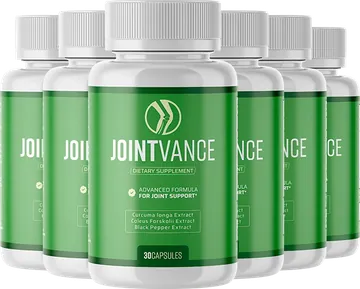
Ready to try JointVance?
Best value$49 a bottle · $294 for 6 $1,074
Why is curcumin poorly absorbed, and why is piperine added?
Poor absorption is curcumin's main weakness.
Curcumin on its own does not get far. Little of it crosses the gut wall, and the liver clears what does arrive quickly. Blood levels stay low.
Piperine, the sharp compound in black pepper, slows that clearing. In a 1998 study, 2 g of curcumin with 20 mg of piperine raised curcumin in human blood by about 2,000% (Shoba et al., 1998).
- 1
Curcumin is swallowed
It dissolves poorly in water, so much of it passes through unabsorbed.
- 2
The gut and liver break it down
Enzymes attach tags to curcumin so the body can flush it out fast.
- 3
Piperine slows those enzymes
With piperine, more curcumin stays in the blood for longer.
- 4
It slows other things too
The same enzymes clear some medicines, so their levels can rise.
JointVance has 5 mg of BioPerine (printed as 5 g), a quarter of the 20 mg in that study. The study measured absorption, not joints. Piperine also raised blood levels of carbamazepine, diclofenac and other drugs (Horn & Hansten, Pharmacy Times 2017). The BioPerine page covers the details.
Curcumin vs turmeric: what is the difference?
The root vs its measured active part.
Turmeric is the whole root. Curcumin is one compound inside it, and it makes up only a small share of the root's weight.
A spoon of kitchen turmeric gives you some curcumin, but the amount varies by crop and is never stated. A standardized extract gives a known amount. That is why studies use extracts.
Turmeric and curcumin forms
| Form | What it is | Curcumin known? |
|---|---|---|
| Turmeric powder (spice) | Ground dried root | No |
| Turmeric root extract 4:1 | Root concentrated about 4 times | No |
| Turmeric extract, 95% curcuminoids | Purified curcuminoids | Yes: 95% by weight |
| Curcumin with piperine | Extract plus black pepper | Yes, with higher absorption |
JointVance uses the last two forms together: a 95% extract plus BioPerine, alongside a 4:1 root extract.
How much curcumin a day is safe? The EFSA limit
About 210 mg for a 70 kg adult.
The European Food Safety Authority set an acceptable daily intake for curcumin of 3 mg per kg of body weight a day (EFSA, Curcumin (E 100), 2010). For a 70 kg (154 lb) adult, that is about 210 mg.
EFSA curcumin limit by body weight
| Body weight | EFSA limit a day (calculated) | JointVance known curcuminoids |
|---|---|---|
| 60 kg (132 lb) | 180 mg | ≈28.5 mg |
| 70 kg (154 lb) | 210 mg | ≈28.5 mg |
| 90 kg (198 lb) | 270 mg | ≈28.5 mg |
The JointVance dose sits well under the limit. One caveat: EFSA set it for curcumin used as a food color. It was not set for supplements that add piperine to raise absorption. So the limit is a useful yardstick, not a safety guarantee.
Does curcumin rebuild cartilage?
Small pain change, no structural change.
No. In the 2020 Annals trial, turmeric extract eased knee pain slightly over 12 weeks. It did not change joint swelling or cartilage composition on MRI (Wang et al., 2020 (Annals RCT)).
The 2021 meta-analysis of 16 trials found the same. Pain and function improved versus placebo, but there was no difference in imaging or biomarkers (Wang et al., 2021 (meta-analysis)).
So curcumin is, at best, a small comfort aid. It does not repair a worn joint. Any JointVance story about regrown cartilage or avoided surgery is not backed by research.
Curcumin side effects and who should ask first
Liver, blood thinners and other medicines.
Curcumin is usually well tolerated at label amounts. Stomach upset, reflux and loose stools are the common complaints (NCCIH, Turmeric, 2025). Three cautions stand out for a curcumin and black pepper product.
Curcumin cautions
| Caution | Why | Source |
|---|---|---|
| Liver | Rare injury; several cases with black pepper or high-absorption forms | LiverTox, Turmeric, 2025 |
| Blood thinners | Curcumin has antiplatelet effects; INR rose above 10 in one warfarin case | Medsafe NZ, Turmeric and warfarin, 2018 |
| Other medicines | Curcumin and piperine can change how some drugs are cleared | MSK About Herbs, Turmeric, 2026 |
If you take any prescription medicine, show the label to your pharmacist. The full list is on JointVance side effects.
Curcuminoids and curcumin questions
How much curcumin is in JointVance?
The label gives about 28.5 mg of curcuminoids a day, from 30 mg of turmeric extract standardized to 95%. The 75 mg 4:1 extract also has some curcumin, but the label does not say how much.
What are curcuminoids?
Curcuminoids are the yellow compounds in turmeric root. Curcumin is the main one, and two close relatives make up the rest. Most turmeric research measures doses in curcuminoids or curcumin.
Is 28.5 mg of curcumin enough for knee pain?
It is well below what knee studies used. The 2016 meta-analysis cites about 1,000 mg of curcumin a day, so 28.5 mg is about 3% of that. No study has tested JointVance itself.
What does 95% curcuminoids mean?
It means 95% of the extract's weight is curcuminoids. So 30 mg of a 95% extract holds about 28.5 mg of curcuminoids (calculated). Standardization lets you know the dose, which a ratio extract does not.
Why is black pepper added to curcumin?
Curcumin is poorly absorbed and quickly broken down. Piperine from black pepper slows that breakdown. In a 1998 study, 20 mg of piperine raised curcumin levels in people by about 2,000%.
How much curcumin per day is safe?
EFSA set an acceptable daily intake of 3 mg of curcumin per kg of body weight, about 210 mg for a 70 kg adult. JointVance's 28.5 mg is well below that. The limit was set for curcumin as a food color, not for supplements with black pepper.
Does curcumin help arthritis?
Curcumin may ease knee osteoarthritis pain a little in short trials, with results similar to NSAIDs in some studies. The evidence is mixed and of moderate quality, and it did not change cartilage on MRI.
Curcumin vs turmeric: which is better?
Neither is clearly better for joints. Curcumin is the measured active part of turmeric, so a standardized extract gives a known dose. JointVance contains both a standardized 95% extract and a 4:1 root extract.
Can curcumin damage your liver?
Rarely, yes. LiverTox lists turmeric and curcumin as a known cause of liver injury, often with black pepper or other high-absorption forms. Stop and call a doctor if you notice dark urine or yellow skin or eyes.
Ready to try JointVance?
Order from the U.S. authorized merchant, keep your order email, and you are covered by the 60-day money-back guarantee. Questions first? Call +1 (302) 200-3480.
- Secure checkout
- 60-day money-back window
- Ships from the US
- Tracking by email
Keep reading
Turmeric root extract
What the 4:1 ratio means, what knee studies found, and who should skip turmeric.
Read more →BioPerine
Black pepper extract that boosts curcumin absorption. Label misprint, drug levels and liver caution.
Read more →Turmeric and liver safety
LiverTox cases, the black pepper link, warning signs and who should avoid turmeric supplements.
Read more →